


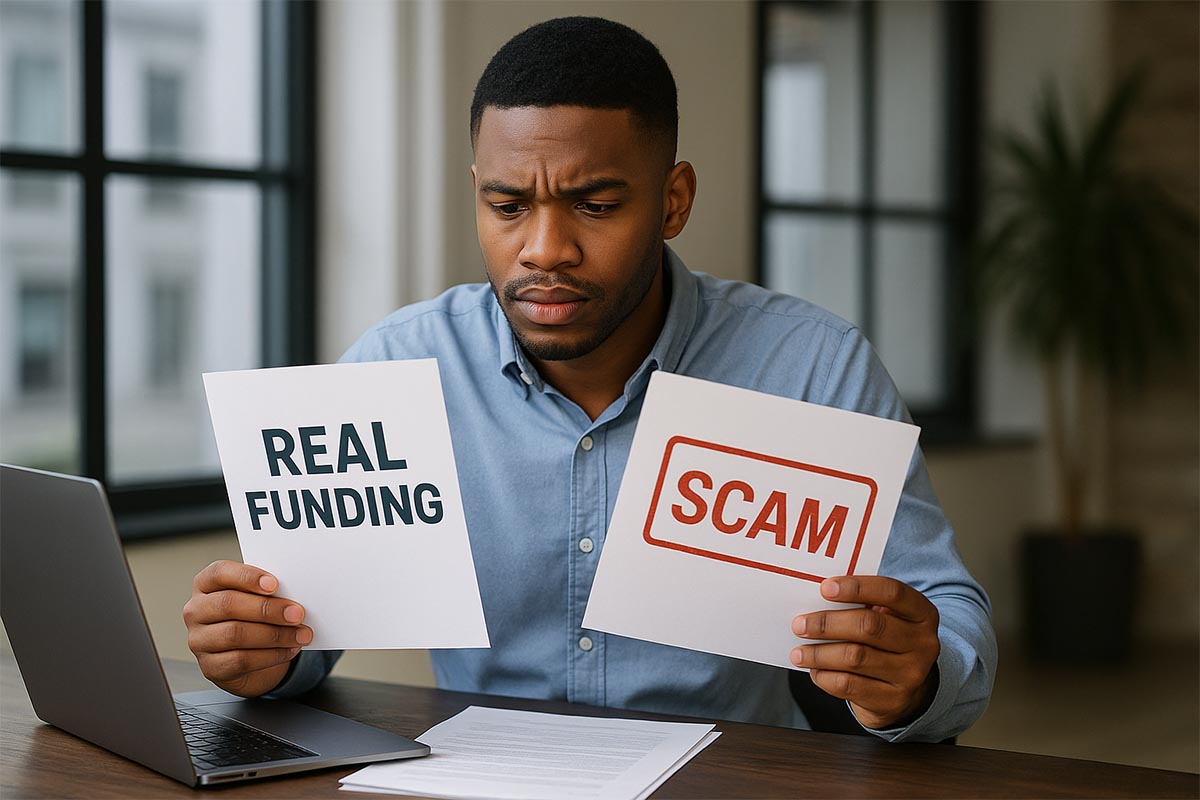
When you’re running a small business or trying to launch a startup in South Africa, access to funding can feel like the difference between survival and shutdown. Unfortunately, scammers know this — and they often prey on entrepreneurs who are desperate for capital.
At StepApp, we want you to get real opportunities, not fake promises. Here’s how to spot the most common funding scams and protect your business.
1. The “Guaranteed Grant” Scam
How it works:
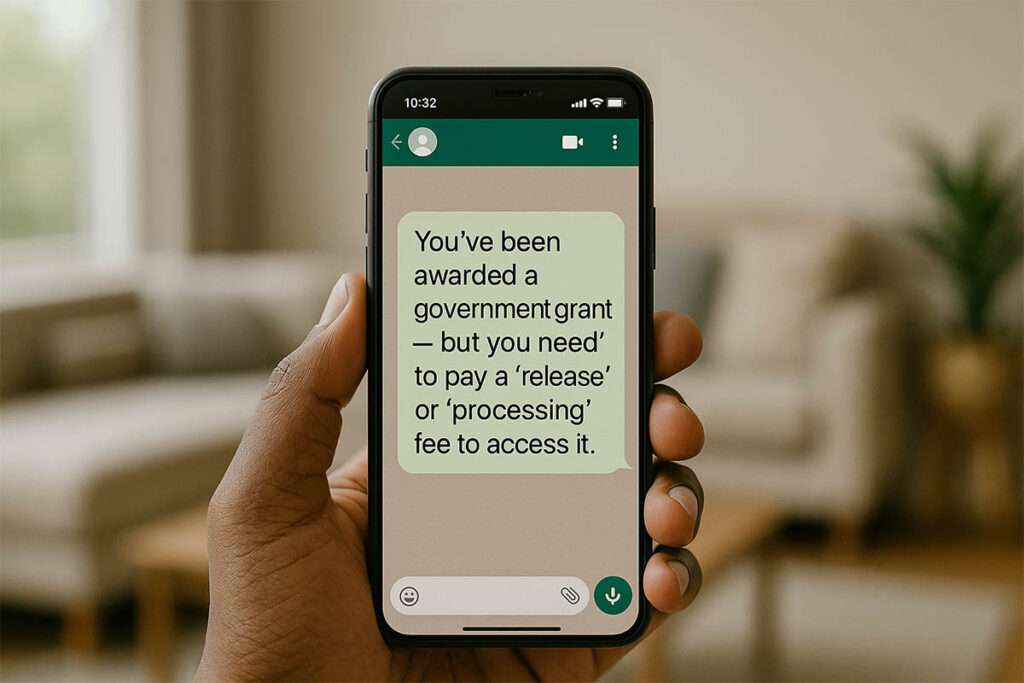
You receive a call, email, or WhatsApp message saying you’ve been awarded a government grant — but you need to pay a “release” or “processing” fee to access it.
Why it’s a scam:
Legitimate government grants in South Africa never require upfront payment. Institutions like the NEF, SEFA, NYDA, and DTIC don’t ask for fees to release funding.
What to do instead:
Visit official websites (e.g. www.sefa.org.za, www.nefcorp.co.za) to verify any funding claims.

2. Fake Investor “Pitch Fees”
How it works:
A supposed investor or investment firm says they’re interested in your business — but first, you must pay a fee to pitch, “register,” or “complete due diligence.”
Why it’s a scam:
Real investors want good businesses, not upfront fees. If they believe in your idea, they’ll back you without demanding money first.
Red flag:
No credible investor will ask for money before meeting you or reviewing your documents in detail.
3. Unverified WhatsApp Groups and Telegram Channels
How it works:
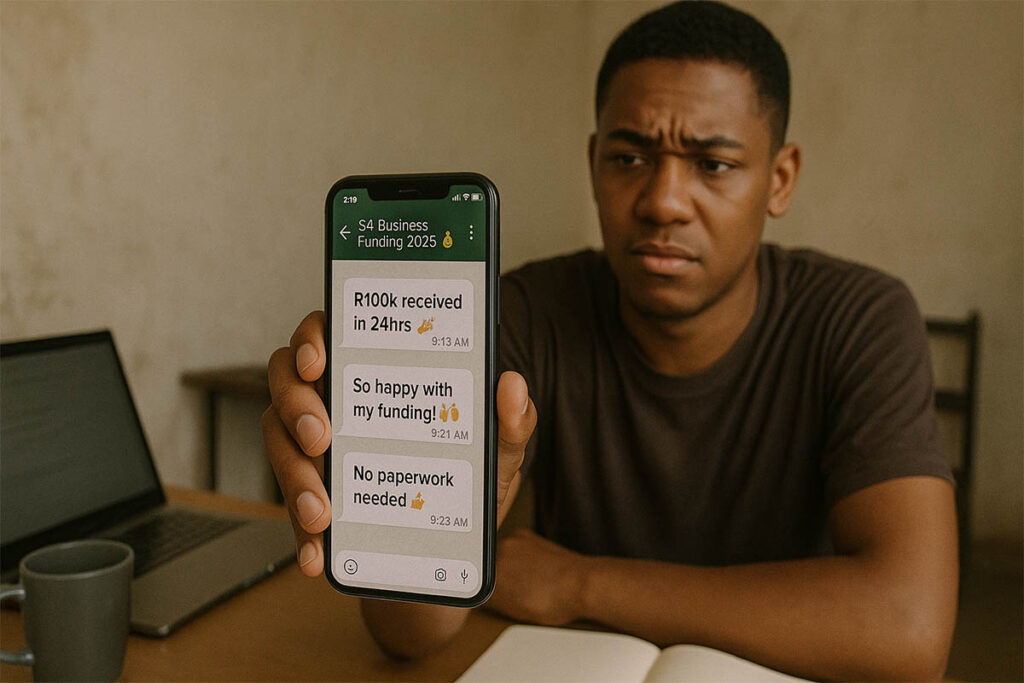
You join a business funding group where people claim they received funding “within hours” — and direct you to a private number or agent.
Why it’s a scam:
These scams often use fake testimonials, stolen logos, and fake screenshots. Once you engage, you’ll be asked for money in exchange for fake forms or “guarantees.”
What to do:
Only join trusted business communities like the StepApp Business Network where admins vet information and protect members from fraud.

4. Advance Fee Loan Scams
How it works:
You’re told you qualify for a loan (even with no documents) but must pay a small “application,” “insurance,” or “legal” fee upfront.
Why it’s a scam:
These “lenders” often disappear after receiving payment — and you never get the loan.
Real lenders (like banks and SEFA):
- Will not ask for payment before paperwork
- Will do credit assessments
- Offer clear terms and contracts
5. Fake NGO or International Donor Emails
How it works:
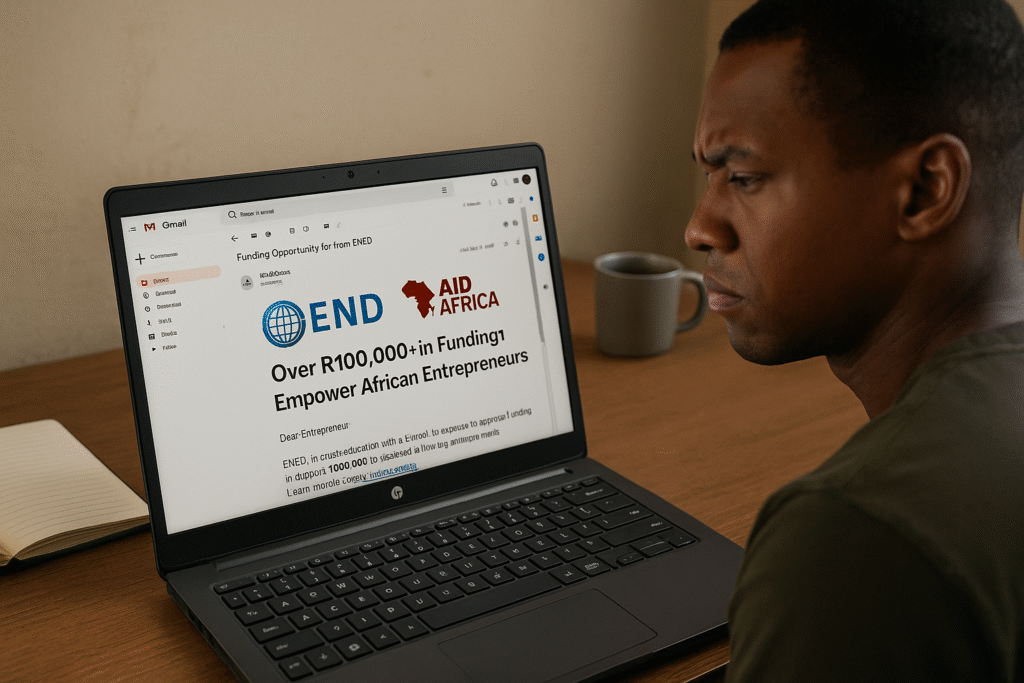
You receive a message from a supposed NGO or international donor offering R100,000+ in funding to “empower African entrepreneurs.” They use impressive logos and websites but eventually ask for “verification costs.”
Why it’s a scam:
Scammers mimic real NGO names and donor logos. Legitimate NGOs don’t cold email unknown businesses with free money.
What to check:
- Look for official domain emails (e.g. @undp.org, not @funding-grants2025.org)
- Search the NGO name on NGO Advisor or local directories
Related post: 7 Common Mistakes Entrepreneurs Make When Applying for Funding
How to Protect Yourself
- Always verify the website and email address of the funder
- Never pay money upfront for access to a grant or loan
- Trust your gut — if it sounds too good to be true, it probably is
- Ask for references or proof of past funding disbursements
- Consult platforms like StepApp or ask in a trusted business community
Verified Funding Sources to Start With:
Stay Smart, Not Sorry
Scammers are counting on your desperation — don’t let them win. Stay informed, stay connected, and always verify before applying or paying.
Need help finding verified tenders and funding?
Join the StepApp Business Network on WhatsApp and get direct updates you can trust.